
Introduction
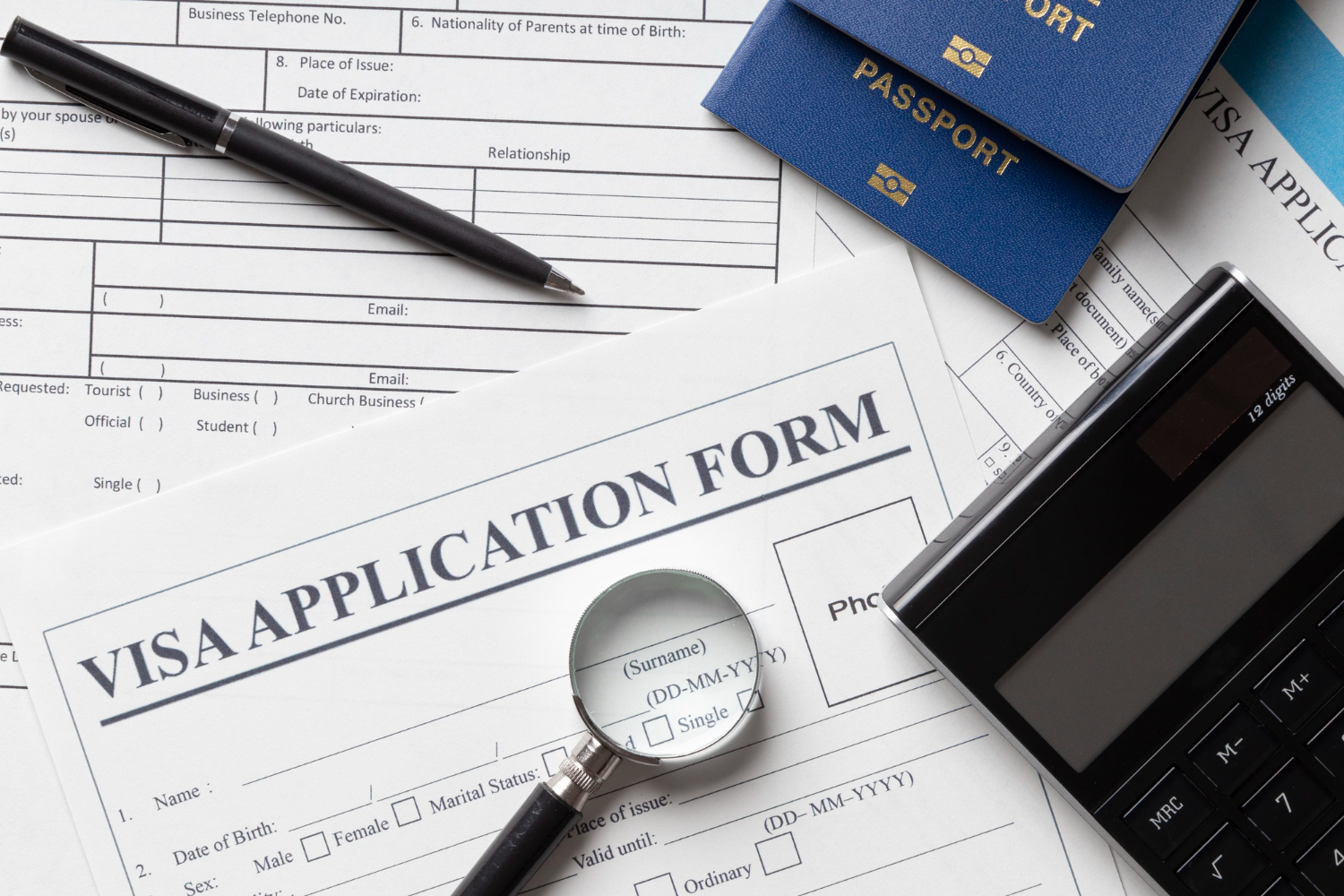
Every year, hundreds of thousands of international students ask the same question: how do I apply for a US student visa and actually get approved? If you are planning to study in the United States in 2026, getting your F1 student visa right on the first attempt saves you months of stress, delays, and wasted money. Moreover, with visa interview wait times growing longer in many countries, starting the process early is more important than ever before.
This step-by-step guide covers everything you need to know about how to apply for a US student visa in 2026, from your very first acceptance letter to the moment you board your flight to America. Whether you are an undergraduate applicant, a graduate student, or a language program enrollee, this guide gives you a clear, honest, and fully up-to-date roadmap to follow.
1. Understanding the US student visa: What you need to know first
Before diving into the application steps, it helps to understand exactly what kind of visa you need and why.
1.1 What is the F1 student visa?
The F1 visa is the primary non-immigrant visa that the US government issues to international students who plan to study full-time at an accredited academic institution. This includes four-year universities, community colleges, graduate schools, doctoral programs, private high schools, and English language programs.
The F1 visa differs from the J-1 exchange visitor visa in one very important way. The J-1 applies to cultural exchange and research programs, while the F1 specifically covers full-time academic enrollment. Furthermore, some J-1 holders face a two-year home residency requirement after their program ends, whereas F1 holders face no such restriction.
1.2 What is the I-20 form and why does it matter?
Your I-20 is the Certificate of Eligibility for Nonimmigrant Student Status. Your school issues this document once they accept you and record your enrollment in the SEVIS system. Consequently, without a valid I-20, you cannot apply for an F1 visa at all. Think of the I-20 as your visa application’s foundation. Every step in the process builds on top of it.
1.3 What is SEVIS?
SEVIS stands for Student and Exchange Visitor Information System. The US Department of Homeland Security uses this database to track international students and exchange visitors throughout their time in the United States. Your SEVIS ID number appears on your I-20 and connects your records across all US immigration systems.
2. Step 1: Get accepted by a SEVP-certified US school
The very first step in the US student visa application process is gaining acceptance from a school that the Student and Exchange Visitor Program (SEVP) has officially certified. Without SEVP certification, a school cannot issue an I-20, which means you cannot get an F1 visa.
2.1 How to verify a school’s SEVP certification
You can confirm any school’s SEVP status by visiting studyinthestates.dhs.gov and using the official school search tool. If a school does not appear in that database, it is not eligible to host F1 students, regardless of how appealing it looks on its website.
2.2 What happens after acceptance?
Once your school accepts you, the Designated School Official (DSO) enters your information into SEVIS and issues your I-20 form. Review every detail on your I-20 carefully. Specifically, check that your name matches your passport exactly, your program start date is correct, and your major and program level are accurate. If you spot any error, contact your DSO immediately and ask for a corrected version before paying any fees.
3. Step 2: Pay the SEVIS I-901 fee
After receiving your I-20, your next step is paying the SEVIS fee through Form I-901. As of 2026, this fee stands at $350 for F1 student visa applicants.
3.1 How to pay the SEVIS fee
Pay the SEVIS fee online at fmjfee.com. You will need your SEVIS ID number, which appears in the top right corner of your I-20. After completing payment, the system generates a payment confirmation receipt. Save this receipt as a PDF and print a physical copy, because you must bring it to your visa interview.
3.2 Common SEVIS fee mistakes to avoid
Many applicants accidentally pay the wrong fee amount or use an incorrect SEVIS ID. Additionally, some students pay through unofficial third-party websites that charge extra fees. Always pay directly through fmjfee.com to ensure the payment registers correctly in the SEVIS system.
4. Step 3: Complete the DS-160 online visa application
The DS-160 is the official online nonimmigrant visa application form. You must complete it at ceac.state.gov before you can schedule your visa interview. This form collects detailed personal, academic, travel, and background information.
4.1 Key sections of the DS-160 form
The DS-160 includes sections covering your personal details, family background, work history, travel history, US contacts, and security questions. Each section requires honest, accurate answers. Providing false information on the DS-160 is a federal offense and results in permanent visa ineligibility.
4.2 Tips for completing the DS-160 without errors
- Use your full legal name exactly as it appears in your passport
- Enter your home address clearly and completely
- List all countries you have visited in the past five years
- Upload a compliant passport-style photo before submitting
- Answer all background and security questions honestly, even if the answer feels sensitive
After submitting your DS-160, the system generates a barcode confirmation page with a unique confirmation number. Save this page immediately because you cannot retrieve it later without the confirmation number.
4.3 What photo does the DS-160 require?
Your DS-160 photo must meet specific US visa photo requirements. Specifically, the photo must show a plain white or off-white background, full frontal face position, neutral expression, and no glasses. The file size must fall between 10KB and 1MB, and the dimensions must be at least 600 x 600 pixels.
5. Step 4: Pay the MRV visa application fee
The Machine Readable Visa (MRV) fee is the official visa application fee. For F1 student visas in 2026, this fee stands at $185. Unlike some other fees, the MRV fee is completely non-refundable regardless of the outcome of your application.
5.1 How and where to pay the MRV fee
Payment methods vary by country. In most countries, you pay through the US Embassy or Consulate’s designated local bank or online portal. Visit the specific US Embassy or Consulate website for your country to find accepted payment methods and instructions. After paying, keep your receipt safely since you need it to schedule your interview appointment.
5.2 MRV fee validity period
Your MRV fee receipt remains valid for one year from the date of payment. Therefore, if you pay the fee but cannot schedule your interview within that window, you may need to pay again. Plan your timeline accordingly to avoid losing your fee payment.
6. Step 5: Schedule your F1 visa interview appointment
With your DS-160 confirmation number and MRV fee receipt ready, you can now schedule your visa interview at the nearest US Embassy or Consulate in your home country.
6.1 How to book your visa interview
Log in to the US visa appointment scheduling system at ustraveldocs.com (or your country-specific equivalent linked from the US Embassy website). Enter your passport number, DS-160 confirmation number, and MRV fee receipt number to access the scheduling system. Then select your preferred US Embassy or Consulate and choose an available date and time.
6.2 Current wait times for US student visa interviews in 2026
Interview wait times vary significantly by country and season. Countries with high visa demand, such as India, China, Nigeria, Brazil, and Mexico, often report wait times of several weeks to several months. Because of this, immigration advisors strongly recommend booking your interview appointment as soon as you receive your I-20, even if your program start date is many months away.
You may apply for an F1 visa up to 365 days before your program start date. However, you cannot enter the United States more than 30 days before the program start date shown on your I-20, regardless of when your visa approval comes through.
6.3 Can you expedite your visa interview?
Many US embassies offer expedited appointment scheduling for applicants with urgent, documented needs. If your program starts very soon and standard appointments are fully booked, check whether your embassy offers an emergency or expedited appointment option. Generally, you must provide documentation proving your urgent timeline.
7. Step 6: Gather your complete visa document package
Showing up to your visa interview with a complete, well-organized document package significantly increases your chances of a smooth, successful interview. Below is the complete checklist.
7.1 Mandatory documents for the F1 visa interview
- Valid passport with at least six months of validity beyond your intended US stay
- DS-160 confirmation page (printed)
- Visa interview appointment confirmation letter
- SEVIS fee payment receipt (Form I-901)
- Form I-20 signed by you and your DSO
- MRV fee payment receipt
- Acceptance letter from your US institution
- One recent passport-style photograph meeting US photo requirements
7.2 Financial documents you must bring
- Personal or family bank statements covering the past three to six months
- Fixed deposit certificates or proof of liquid assets
- Scholarship or financial aid award letters if applicable
- Sponsorship letter and sponsor’s financial documents if a third party funds your studies
- Affidavit of support if a US-based individual sponsors your education
7.3 Academic and supporting documents
- All prior academic transcripts and certificates
- High school diploma or bachelor’s degree certificate (depending on your level)
- Standardized test score reports (GRE, GMAT, SAT, TOEFL, IELTS, Duolingo English Test, etc.)
- Resume or CV highlighting your academic and professional background
- Previous US visa stamps and travel history if applicable
7.4 Documents proving ties to your home country
This is one area where many applicants underestimate the importance of documentation. Consular officers want concrete proof that you intend to return home after your studies.
- Property ownership documents in your name or your family’s name
- Family status documents (marriage certificate, birth certificates of children, etc.)
- Evidence of business ownership or employment waiting for you at home
- Job offer letters or letters of intent from employers in your home country
- Any other evidence of strong personal or financial ties to your home country


8. Step 7: Attend and ace your F1 visa interview
Your visa interview is the most consequential step in the entire application process. In just two to five minutes, a consular officer evaluates your academic intentions, financial readiness, and your commitment to returning home after graduation.
8.1 What happens at the US Embassy on interview day
On the day of your interview, arrive at least 30 minutes early. Security at US Embassies is strict, and delays at the entrance can cause you to miss your appointment slot. Once inside, you will go through a document check, biometric data collection (fingerprinting), and finally a face-to-face interview with a consular officer.
8.2 Most common F1 visa interview questions in 2026
Academic questions:
- Why do you want to study in the United States specifically?
- Why did you choose this particular university and program?
- What will you study and what career does this prepare you for?
- Why not pursue this degree in your home country?
Financial questions:
- How much does your program cost per year?
- Who funds your education and living expenses?
- How will you cover costs if your expenses increase?
Post-graduation questions:
- What are your plans after you finish your degree?
- What job opportunities exist for someone with your qualifications in your home country?
- Do you plan to stay in the United States permanently?
Background questions:
- Have you visited the United States before?
- Do you have relatives or friends living in the US?
- Has a US visa ever been denied to you before?
8.3 Proven strategies for a successful visa interview
- Speak clearly and confidently without rushing your answers
- Keep your answers honest, specific, and directly relevant to the question
- Avoid volunteering information the officer did not ask for
- Bring organized documents but only present them when the officer requests
- Prepare a clear narrative connecting your past education, chosen program, and future career goals
- Practice your answers out loud before the interview, not just in your head
9. Step 8: Wait for your visa decision and passport return
After your interview, the consular officer will either approve your visa on the spot, place your application under administrative processing, or deny your application.
9.1 What does visa approval look like?
When the officer approves your visa, they collect your passport and courier it back to you with the F1 visa stamp inside. Standard processing takes three to five business days after the interview in most countries. Always use tracking information to monitor your passport delivery.
9.2 What is administrative processing (221(g))?
Administrative processing means the consular officer needs additional time or information before making a final decision. You may receive a slip requesting additional documents, or your case may simply require a background security check. Administrative processing can take anywhere from a few days to several months. Check your case status at ceac.state.gov using your application ID.
9.3 What to do if your F1 visa gets denied
If an officer denies your visa, they will provide a written reason citing the relevant section of the Immigration and Nationality Act (INA). The most common denial reason is Section 214(b), which means the officer was not sufficiently convinced of your nonimmigrant intent or financial ability. You can re-apply at any time, but you should address the specific denial reason with stronger documentation before doing so.
10. Step 9: Enter the United States with your F1 visa
Once your passport returns with the F1 visa stamp inside, you are almost there. However, receiving the visa stamp does not automatically guarantee entry into the US. Customs and Border Protection (CBP) officers at the port of entry make the final decision on whether to admit you.
10.1 Documents to carry when entering the US
- Valid passport with your F1 visa stamp
- Original signed I-20 from your school
- Proof of financial support (in case CBP requests it)
- Acceptance letter from your university
- Proof of accommodation in the US (dorm confirmation, lease agreement, etc.)
10.2 What happens at the US port of entry
A CBP officer will review your passport and I-20, ask a few basic questions about your program and intended stay, scan your biometrics, and stamp your entry. Starting January 2025, the US government fully digitized the I-94 arrival record, so CBP no longer issues a physical I-94 card. Instead, you can access your I-94 record online at cbp.gov/i94 within 24 hours of arrival.
10.3 Can you enter the US more than 30 days before your program?
No. F1 visa regulations specifically allow entry no more than 30 days before your program start date, as shown on your I-20. Arriving earlier can result in the CBP officer denying you entry or questioning your intentions. Plan your travel date carefully around this restriction.
11. Step 10: Report to your school’s international student office
Your final step in the F1 student visa process is checking in with your school’s international student office within the first few days of arriving on campus. This step is not optional. Your DSO must update your SEVIS record to show that you have arrived and reported to school. Failing to complete this step can trigger a status violation even before your classes begin.
11.1 What to bring to your international student office check-in
- Your original I-20
- Your passport with F1 visa stamp
- Your I-94 arrival record (access it at cbp.gov/i94)
- Any other documentation your school specifically requests
11.2 Important F1 status rules to follow after arrival
- Maintain full-time enrollment every semester (minimum 12 credit hours for undergraduates, 9 for graduate students)
- Report any change of address to your DSO within 10 days
- Never work off-campus without proper CPT or OPT authorization
- Keep your passport valid at all times during your stay
- Renew your I-20 before it expires if your program extends beyond the listed end date
12. F1 student visa fees: Complete 2026 cost breakdown
Planning your budget accurately avoids unpleasant financial surprises along the way.
| Fee | Amount (USD) |
|---|---|
| SEVIS Fee (Form I-901) | $350 |
| MRV Visa Application Fee | $185 |
| Document translation (estimated) | $50 to $200 |
| Medical exam (if required) | Varies by country |
| Travel to embassy for interview | Varies |
| Total government fees | $535 minimum |
Note that these figures reflect US government-mandated fees only. Additional costs such as courier fees, application support services, and travel to the embassy are separate expenses.
13. How to maintain your F1 student status in the US
Getting your visa approved is one achievement. Keeping your F1 status valid throughout your time in the US is an entirely different responsibility.
13.1 Work authorization rules for F1 students
On-campus employment: You may work up to 20 hours per week on campus during the academic semester and full-time during official school breaks. No additional authorization is necessary for on-campus work.
Curricular Practical Training (CPT): CPT allows off-campus work that directly relates to your major. Your DSO must authorize CPT before you start working. Using more than 12 months of full-time CPT makes you ineligible for OPT, so manage your CPT usage carefully.
Optional Practical Training (OPT): OPT gives you up to 12 months of post-graduation work authorization in your field of study. Additionally, STEM degree graduates can apply for a 24-month STEM OPT extension, bringing their total work authorization period to 36 months.
13.2 Traveling internationally as an F1 student
If you leave the US and plan to return, carry your valid passport with the F1 visa stamp and a valid I-20 signed by your DSO within the past 12 months. If your F1 visa stamp expires while you are studying in the US, you must obtain a new F1 visa from a US Embassy or Consulate abroad before re-entering. Your in-US status remains unaffected by visa stamp expiry, but re-entry requires a valid stamp.
14. Top 10 frequently asked questions about applying for a US student visa in 2026
FAQ 1: How long does the US student visa application process take in 2026?
The total timeline from submitting the DS-160 to receiving your visa typically ranges from four to twelve weeks, depending on your country and embassy wait times. In high-demand countries like India and China, interview slots book out several months in advance. Therefore, start the process at least three to four months before your program start date.
FAQ 2: What is the success rate for F1 student visa applications?
Globally, the F1 visa approval rate is generally high for well-prepared applicants with strong academic profiles and clear financial documentation. However, applicants who lack strong ties to their home country or cannot prove sufficient financial support face higher denial rates. Thorough preparation dramatically improves your approval chances.
FAQ 3: Can I apply for a US student visa without a bank statement?
No. Financial documentation is a mandatory part of the F1 visa application. Consular officers need concrete proof that you can afford your tuition and living expenses without resorting to unauthorized work. Bank statements, scholarship letters, sponsor documents, or a combination of these are all acceptable forms of financial evidence.
FAQ 4: Can I apply for a US student visa if I was previously denied?
Yes. A previous denial does not permanently bar you from reapplying. However, you must address the specific reason for the denial in your new application. Applying again without changes to your application documents or circumstances rarely produces a different result.
FAQ 5: What happens to my US student visa if I change schools?
If you transfer from one US school to another, your SEVIS record transfers to your new school. Your DSO at the new school issues you a fresh I-20. As long as you maintain continuous enrollment and proper SEVIS status, your existing F1 visa stamp remains valid for re-entry until its expiration date.
FAQ 6: Do I need a visa interview waiver for the US student visa?
Most F1 student visa applicants must attend an in-person interview. The US government does offer interview waivers in limited circumstances, such as for certain renewal applicants. However, first-time F1 applicants and those applying in high-demand countries almost always need to attend an interview in person.
FAQ 7: Can I apply for a US student visa while visiting the US on a tourist visa?
Yes, in theory. You can apply to change your status from a B1/B2 tourist visa to an F1 student visa from within the US by filing Form I-539 with USCIS. However, this process is complex, takes many months, and does not always succeed. In most cases, immigration advisors recommend returning home and applying for the F1 visa through your local US Embassy or Consulate instead.
FAQ 8: How much money do I need in my bank account for a US student visa?
There is no single universal amount. Generally, you should show proof of funds covering at least one full year of tuition plus living expenses, which typically ranges from $20,000 to $60,000 depending on your school and location. For multi-year programs, showing funds for the full program length strengthens your application considerably.
FAQ 9: What is the difference between the F1 visa and the M1 visa?
Both are US student visas, but they serve different educational contexts. The F1 visa covers academic study at colleges, universities, high schools, and language programs. The M1 visa, on the other hand, covers non-academic or vocational training programs. If you plan to attend a vocational or technical school, you may need an M1 visa rather than an F1 visa.
FAQ 10: Can I extend my F1 student visa if my program takes longer than expected?
Yes. If your studies extend beyond your original I-20 end date, your DSO can issue a program extension and update your SEVIS record with a new I-20. You do not need to return home or apply for a new visa simply because your program extends. However, if your visa stamp expires during your extended stay and you need to travel internationally, you must apply for a new F1 visa stamp before re-entering the US.
Conclusion
Learning how to apply for a US student visa in 2026 is one of the most important skills you can develop as an aspiring international student. The process involves ten clearly defined steps, each building directly on the one before it. Furthermore, every step requires careful attention to detail, honest documentation, and proactive planning.
To put it simply: start early, prepare thoroughly, and always follow official US government guidelines rather than relying on outdated third-party information. The earlier you secure your interview appointment, gather your financial documents, and practice your interview answers, the smoother your entire visa journey will be.
Ultimately, the F1 student visa is not just a bureaucratic requirement. Rather, it is the first official step toward a life-changing academic experience in one of the world’s most dynamic countries. Follow this step-by-step guide, stay organized, and trust the process. Your American academic journey is well within reach.












Leave a comment