


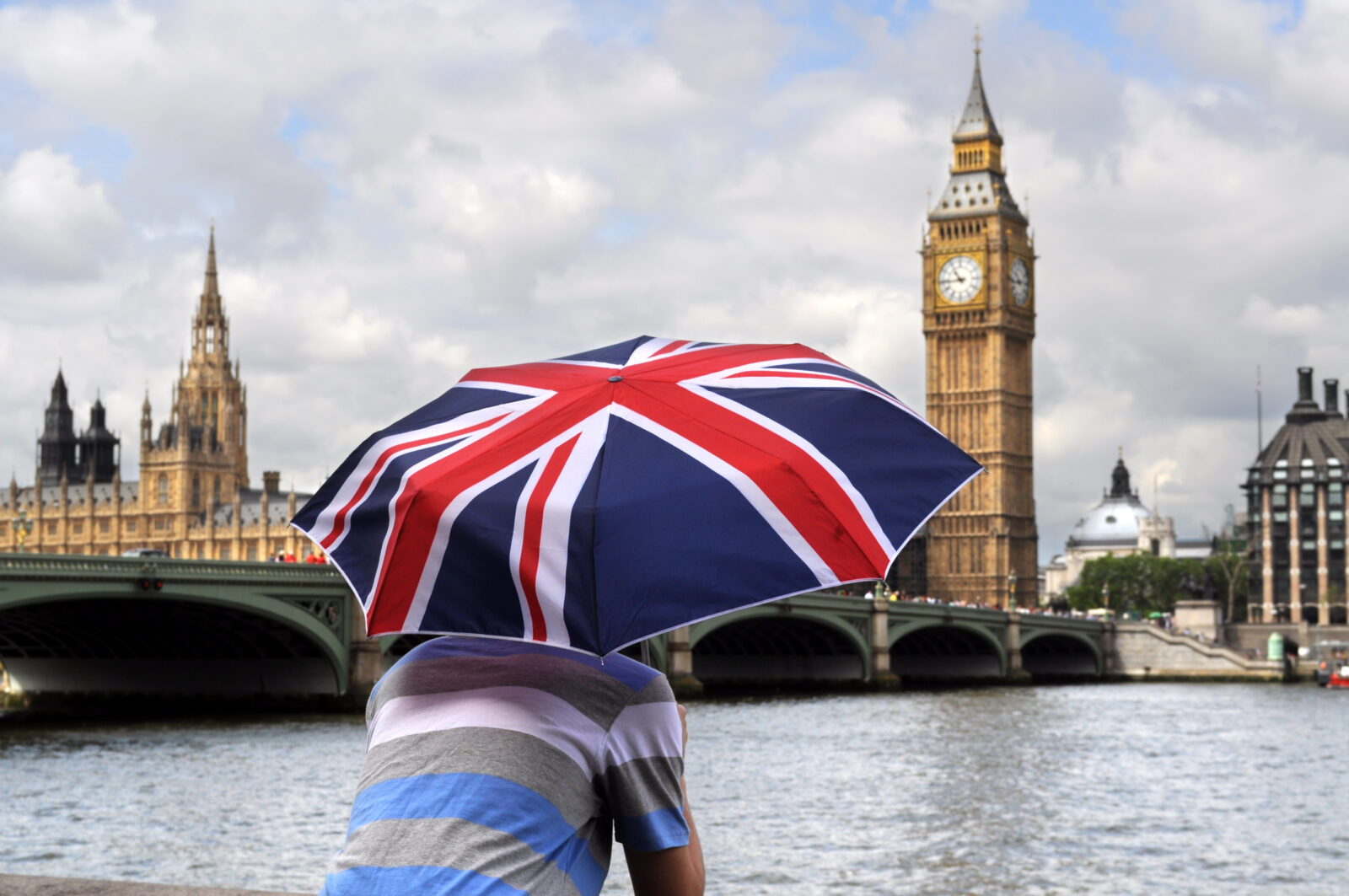
A decade has passed since the United Kingdom voted, by a slim margin, to leave the European Union in June 2016 — a result driven more than by any other single factor by promises to bring what campaigners branded “out-of-control immigration” back under national control. Ten years on, that pledge remains largely unfulfilled, and the issue it was built on is arguably more volatile now than at any point since the referendum.
The raw numbers tell part of the story. According to the Office for National Statistics, roughly 758,000 migrants arrived in Britain in the twelve months to June 2016. In the year to June 2025, the figure stood at about 761,000 — marginally higher than before Brexit, despite a succession of governments promising to bring it down.
A debate driven by a small share of arrivals
Much of the political heat has centred on asylum seekers who reach Britain by crossing the English Channel in small boats, even though such arrivals typically account for less than five percent of total immigration. Oxford University’s Migration Observatory recorded around 36,000 small-boat arrivals in the year to the end of May — down 13 percent on the previous year, and well under half of all people seeking asylum. Yet the imagery of the crossings has come to dominate public debate far out of proportion to the numbers involved.
From Belfast to Southampton: a recurring pattern of unrest
That imbalance has repeatedly spilled over into violence. The most recent flashpoint came in Northern Ireland, where a knife attack in north Belfast on June 8 set off nights of rioting directed at ethnic-minority residents. A 30-year-old Sudanese man, Hadi Alodid, was charged with attempted murder and related offences and remanded in custody; the victim lost an eye in the attack. In the days that followed, masked groups set fire to homes and vehicles and forced families from their houses. Among those caught up in the disorder were two care workers from Uganda who had to be rescued after becoming trapped inside their home — one of whom later noted that people attacking migrants often had no idea they might be targeting the very individuals looking after their elderly relatives.
Belfast was not an isolated episode. Months earlier, the southern English city of Southampton had erupted following the trial of Vickrum Digwa, a British-born man jailed for life on June 1 for the murder of 18-year-old Henry Nowak the previous December. Anger intensified when police body-camera footage revealed that officers had handcuffed the dying teenager, having at first disbelieved that he had been stabbed. Digwa had falsely told police that his victim had racially abused him.
The pattern stretches back further still. In the summer of 2024, the murder of three young girls at a Taylor Swift-themed dance class in Southport triggered some of the worst rioting Britain had seen in years, as shops, mosques and hotels housing asylum seekers were targeted. The violence was fuelled by false online claims that the attacker was an Islamist migrant. In reality, the perpetrator — later sentenced to life imprisonment — had been born in Britain to a family that had moved from Uganda decades earlier.
The amplifying role of social media
A thread running through each of these episodes is the way social media has amplified public anger, frequently faster than the facts could catch up. Posts by the far-right activist Tommy Robinson, casting the Belfast attack in inflammatory terms and publicising the locations of protests, were shared by Elon Musk — reported at the time to have recently become the world’s first trillionaire — and viewed more than ten million times. Musk, who owns the platform X, called for repeated and vocal protest, and it was not his first foray into British affairs: after the Southampton footage surfaced, he urged his followers to circulate it as widely as possible. His involvement drew a rebuke from Prime Minister Keir Starmer, who accused him of trying to stir up division and maintained that Britain remained a country of, in his words, “reasonable, tolerant people.”
Reform UK leader Nigel Farage seized on the Southampton case as evidence of what he described as “two-tier policing.” US Vice-President JD Vance added his voice from across the Atlantic, arguing that such tragedies were the product of decades of European elites failing, as he saw it, to resist mass migration.
A political landscape tilting toward the populist right
Whatever the specifics of each individual case, the cumulative effect has been to build momentum behind Britain’s populist right ahead of a general election that must be held no later than 2029 — a contest that could bring an end to the country’s long-standing two-party system. For months, opinion polls have placed Reform UK on between 25 and 30 percent support, ahead of both Labour and the Conservatives, each sitting below 20 percent. In many towns, that shift is visible in the growing number of St George’s flags flown from homes and lamp-posts — displays framed as patriotic, but which critics interpret as a sharper expression of nationalism.
The party’s rise was on stark display in early May, when it swept local elections across England, gaining 1,454 council seats and taking control of 14 authorities, while Labour lost 1,498 seats and 38 councils. A BBC projection of those results onto a national vote put Reform first on 26 percent, ahead of the Greens, Conservatives, Labour and Liberal Democrats. The Electoral Reform Society concluded that British public opinion had become unusually fragmented. Reform now holds eight seats in the Commons, up from the five it won in 2024 alongside 14.3 percent of the vote, bolstered by defecting Conservatives including former Home Secretary Suella Braverman.
The Makerfield test — and a warning sign for the right’s unity
That fragmentation was put to the test in mid-June in the northern constituency of Makerfield, where a by-election had been engineered after the sitting Labour MP stepped aside to give Andy Burnham, the mayor of Greater Manchester, a route back to Westminster and a possible tilt at Starmer’s leadership. In the event, Burnham held the seat comfortably for Labour on June 18, securing almost 25,000 votes and a majority of more than 9,200. Reform’s candidate finished a distant second — a noticeably weaker result than the party had managed in the same area at the local elections, helped by tactical voting that squeezed the smaller parties.
Even so, the contest highlighted a deeper realignment on the right. Part of the right-wing vote was drawn away by Restore Britain, a party positioned still further right than Reform. It was founded in mid-2025 by Rupert Lowe after he was suspended by Reform amid a dispute with Farage, during which Lowe pushed for a far larger deportation programme. His uncompromising position — that anyone in the country unlawfully should be removed, whatever the eventual total — appeals to a slice of the electorate that Reform may come under pressure to match.
The stakes are considerable. The election-modelling firm Electoral Calculus has estimated that a general election held now could hand Reform 376 seats, leaving both the Conservatives and Labour far behind. For the roughly 16 percent of UK residents — some 11 million people — who were born abroad, that trajectory points toward an increasingly uncertain future.
SOURCE:Arab News PK
DISCLAIMER
This article has been independently written and edited by the CBR Times editorial team using publicly reported information, and is provided for general informational purposes only. It draws on original reporting by the source named above, along with publicly available records. While we make every effort to ensure accuracy, CBR Times offers no warranty as to the completeness or reliability of the content, and details relating to ongoing legal proceedings or a developing political situation may change after publication. Individuals charged with offences are entitled to the presumption of innocence unless and until convicted. Quotations attributed to public figures reflect statements made publicly; the views expressed are their own. For the original reporting, please consult the source linked above.











Leave a comment